Fully Funded Scholarships to Study in the USA 2026 with Visa Sponsorship
Securing fully funded scholarships for international students is the most effective way to access the prestigious American academic system without the burden of high tuition costs. For the 2026 academic cycle, numerous programs offer comprehensive higher education funding that covers the total cost of attendance, including housing, health insurance, and monthly stipends.
A critical component of these awards is US student visa sponsorship, where the host institution or government body provides the necessary I-20 or DS-2019 documentation required for a successful F-1 visa application or J-1 visa sponsorship. Navigating the university application process in the United States requires early preparation and a clear understanding of the international student financial aid application requirements.
Whether you are seeking undergraduate scholarships in USA or competitive graduate scholarships in USA, identifying programs that offer full tuition scholarships for international students is essential for financial stability. The best scholarships for international students 2026 often integrate academic support with legal guidance, ensuring that scholars can study in USA with scholarship benefits that extend from the classroom to the embassy interview.
Understanding Visa Sponsorship for International Students
For many applicants, the most complex part of the university application process is securing the legal right to enter the country. When a student receives fully funded scholarships for international students, the funding organization or the university acts as the primary sponsor for their legal stay. This US student visa sponsorship is a mandatory requirement for the issuance of a student visa, as it confirms that the individual has been accepted into a certified program and has the necessary higher education funding to support themselves without becoming a public charge. Without a valid sponsorship document, an applicant cannot proceed with their F-1 visa application or J-1 visa sponsorship request at a United States embassy or consulate.
The Distinction Between F-1 and J-1 Visas
International students typically enter the United States under one of two visa categories. The F-1 visa is the most common for those pursuing a full degree at a college or university. In this case, the university provides the sponsorship through an I-20 form. Conversely, the J-1 visa is often used for exchange programs or government-funded initiatives, such as the Fulbright program. For those who study in USA with scholarship packages provided by a government agency, J-1 visa sponsorship is standard and often comes with a two-year home-residency requirement. Understanding which visa category applies to your specific higher education funding is vital, as the regulations regarding employment and post-graduation stay differ significantly between the two.
The Role of the I-20 and DS-2019 Forms
Once a student is admitted and their international student financial aid application is approved, the institution generates a Certificate of Eligibility. For F-1 students, this is the Form I-20, while for J-1 students, it is the Form DS-2019. These documents are the physical evidence of US student visa sponsorship. They detail the student’s program of study, the expected duration of the course, and a breakdown of the cost of attendance. For recipients of full tuition scholarships for international students, these forms will explicitly state that the tuition, fees, and living expenses are covered by the sponsoring body. This documentation is the primary evidence used during the visa interview to prove that the student has secured the best scholarships for international students 2026.
Financial Certification and the SEVIS Fee
A major hurdle in the F-1 visa application process is proving financial self-sufficiency. However, students with fully funded scholarships for international students use their official award letter as their financial certification. This letter serves as “Proof of Funds,” showing that the higher education funding meets or exceeds the estimated cost of attendance required by the Department of Homeland Security. Additionally, all international students must pay the I-901 SEVIS fee before their visa interview. Many of the best scholarships for international students 2026 include the cost of this fee in their initial travel or settling-in allowance, further reducing the financial burden on the student.
- The I-20 or DS-2019 is the official document required to book a visa interview.
- Sponsorship ensures the student remains in legal status throughout their academic program.
- The scholarship award letter acts as the primary financial evidence for the consular officer.
- Visa sponsorship is tied directly to the institution or agency providing the higher education funding.
By integrating US student visa sponsorship into the award package, these programs ensure that students can focus on the university application process and their future studies rather than the logistical challenges of immigration. This comprehensive support is what defines the most sought-after undergraduate scholarships in USA and graduate-level funding opportunities.
Top Government Funded Scholarships with Visa Sponsorship
The United States government offers several prestigious programs that provide fully funded scholarships for international students through the Department of State. These programs are unique because they include mandatory J-1 visa sponsorship, which facilitates the entry of scholars as exchange visitors. Unlike university-specific awards, these government grants often prioritize cultural exchange and leadership development alongside academic excellence. For the 2026 cycle, these remain the best scholarships for international students 2026 due to their comprehensive coverage of the cost of attendance and travel expenses.
The Fulbright Foreign Student Program
The Fulbright program is the most recognized of all graduate scholarships in USA, operating in more than 160 countries. It provides full tuition scholarships for international students pursuing a Master’s or Ph.D. degree. The award is designed to cover tuition, a monthly living stipend, health insurance, and round-trip airfare. Because it is a government-sponsored initiative, it includes full J-1 visa sponsorship, and recipients are often required to return to their home countries for at least two years after completing their studies. The university application process for Fulbright is managed by the binational Fulbright Commission or the U.S. Embassy in the applicant’s home country, making it a distinct track from the standard international student financial aid application used by individual colleges.
Hubert H. Humphrey Fellowship Program
The Humphrey Fellowship is a non-degree program aimed at mid-career professionals who demonstrate leadership potential and a commitment to public service. This program provides fully funded scholarships for international students to spend one academic year in the U.S. for professional development and academic coursework. Funding includes tuition and fees at the assigned host university, a living allowance, a one-time settling-in grant, and accident and sickness coverage. Like Fulbright, it provides J-1 visa sponsorship. This is an ideal path for those who wish to study in USA with scholarship support without the long-term commitment of a full degree program, focusing instead on high-level higher education funding for professional growth.
Global Undergraduate Exchange Program
Commonly known as Global UGRAD, this initiative provides undergraduate scholarships in USA for high-potential student leaders to experience the U.S. educational system for one semester. The program covers full tuition, room and board, a monthly stipend, and all travel costs. It is specifically designed for students from underrepresented backgrounds who have not previously had the opportunity to study abroad. The university application process is highly competitive and requires a strong record of community service. Participants receive J-1 visa sponsorship and are placed at a variety of colleges and universities across the United States, ensuring a diverse exposure to American culture and academic standards.
- Fulbright awards are available for graduate-level study and research.
- Humphrey Fellowships focus on professional fields like public policy and health.
- Global UGRAD is a non-degree undergraduate semester exchange.
- All three programs include mandatory J-1 visa sponsorship and full travel funding.
Elite University-Specific Full Scholarships
Several top-tier American universities provide institutional higher education funding that effectively results in fully funded scholarships for international students. These institutions are among the few in the world that practice need-blind admissions for all applicants, including non-citizens. This means that during the university application process, an applicant’s financial situation is not considered, and the university guarantees to meet 100% of the demonstrated financial need for those who are admitted. These awards are often the best scholarships for international students 2026 because they cover the total cost of attendance without requiring repayment.
Need-Blind Admissions at Harvard and Yale
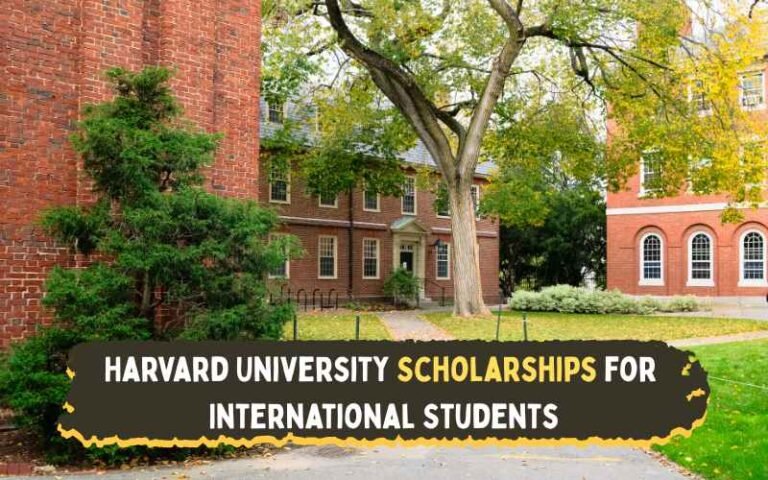
Harvard University and Yale University are leaders in providing financial aid for international students. Both institutions treat international applicants the same as domestic applicants during the review process. If a student is accepted, the university uses the international student financial aid application to determine the family’s contribution. For families with low income, these universities provide full tuition scholarships for international students that also include room, board, and personal allowances. Upon admission and financial aid approval, these schools provide the necessary documentation for US student visa sponsorship, allowing students to proceed with their F-1 visa application.
Stanford Knight-Hennessy Scholars Program
The Knight-Hennessy Scholars program at Stanford University is one of the most comprehensive graduate scholarships in USA. It provides up to three years of higher education funding for students pursuing any graduate degree at Stanford, including Ph.D., Masters, MBA, and MD programs. The scholarship covers full tuition and associated fees, a stipend for living and academic expenses, and a travel grant for one annual return trip. Because Stanford is a world-class research hub, this program is highly competitive. Successful scholars receive US student visa sponsorship through Stanford’s International Center, facilitating the study in USA with scholarship benefits that extend across all graduate divisions.
Princeton and MIT Financial Aid Policies
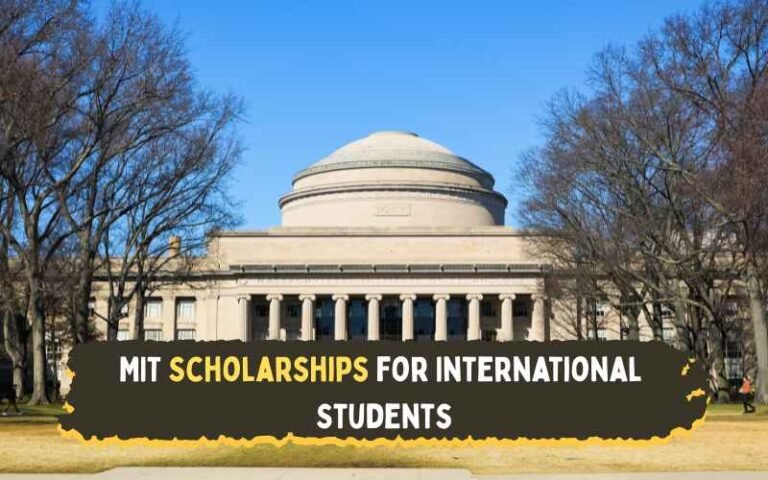
Princeton University and the Massachusetts Institute of Technology (MIT) also offer some of the most generous undergraduate scholarships in USA. Princeton’s financial aid program is recognized for being entirely grant-based, meaning it does not include any international student loans in its packages. MIT similarly ensures that students from all over the world can afford to attend by providing need-based full tuition scholarships for international students. Both institutions require the submission of the CSS Profile as part of the international student financial aid application. Once the financial package is finalized, the institutions issue the I-20 form required for the F-1 visa application, ensuring the cost of attendance is fully managed by the university.
- Princeton provides full funding for tuition, room, and board for families earning below a certain income threshold.
- MIT offers need-based grants that cover the gap between family contribution and the total cost of attendance.
- Stanford’s Knight-Hennessy program focuses on multidisciplinary leadership and graduate-level research.
- All these elite institutions provide dedicated support for US student visa sponsorship to admitted international scholars.
Prestigious Private and Foundation Scholarships
Private foundations and non-profit organizations play a critical role in providing fully funded scholarships for international students who demonstrate exceptional leadership and academic potential. These organizations often partner with specific American universities to streamline the university application process and ensure that the higher education funding covers the entire cost of attendance. Unlike government-sponsored awards, these private grants often focus on specific demographic groups or academic fields, offering a tailored approach to those who wish to study in USA with scholarship support.
Mastercard Foundation Scholars Program
The Mastercard Foundation provides some of the most comprehensive undergraduate scholarships in USA and graduate scholarships in USA for students from Sub-Saharan Africa. This program covers full tuition scholarships for international students, as well as room and board, books, supplies, and health insurance. A unique feature of this scholarship is the inclusion of travel costs and a comprehensive support system that includes mentoring and career placement. Partner institutions, such as Arizona State University and the University of California, Berkeley, handle the US student visa sponsorship for these scholars, issuing the I-20 forms necessary for the F-1 visa application. This program is widely considered among the best scholarships for international students 2026 for those committed to returning to Africa to lead social and economic change.
AAUW International Fellowships
The American Association of University Women (AAUW) offers international fellowships for women who are pursuing full-time graduate or postgraduate study in the United States. These fellowships are intended for women who are not U.S. citizens or permanent residents and who intend to return to their home countries to pursue a professional career. The funding is designed to cover the cost of attendance, including living expenses, childcare, and travel to professional conferences. While the fellowship itself provides the higher education funding, the recipient’s host university typically manages the US student visa sponsorship. This award is a vital resource for women who might otherwise need to rely on international student loans to complete their advanced degrees.
Rotary Peace Fellowships
Each year, Rotary International awards fully funded scholarships for international students to pursue a Master’s degree or a professional development certificate in fields related to peace and conflict resolution. The fellowship covers tuition and fees, room and board, round-trip transportation, and all internship and field study expenses. For those placed at Duke University or the University of North Carolina at Chapel Hill, the program provides J-1 visa sponsorship. The selection process is rigorous and occurs well in advance of the university application process, making it essential for candidates to begin their international student financial aid application early in the cycle.
- Mastercard Foundation focuses on African youth with leadership potential.
- AAUW supports women in graduate and postgraduate programs across all disciplines.
- Rotary Peace Fellowships provide full funding for peace and development studies.
- Private foundations often provide additional stipends for professional networking and internships.
Eligibility and Selection Criteria for 2026
To qualify for fully funded scholarships for international students, applicants must meet a rigorous set of academic and personal standards. Selection committees for higher education funding evaluate candidates based on a holistic review process that considers more than just academic scores. For the 2026 cycle, the best scholarships for international students 2026 will prioritize individuals who demonstrate a unique combination of intellectual merit and the potential to contribute to their home communities after they study in USA with scholarship support. Meeting the basic eligibility requirements is the first step in a successful university application process.
Academic Performance and Standardized Testing
Most undergraduate scholarships in USA require a minimum Grade Point Average (GPA) of 3.5 on a 4.0 scale or its international equivalent. For graduate scholarships in USA, the requirement is often higher, focusing on research output, professional experience, and undergraduate performance. While many institutions have moved toward a test-optional university application process, submitting high SAT, ACT, GRE, or GMAT scores remains a significant advantage when competing for full tuition scholarships for international students. These scores serve as a standardized benchmark to justify the allocation of extensive higher education funding and help the university determine which students can handle the academic rigors associated with the cost of attendance.
Leadership Potential and Extracurricular Engagement
Selection for fully funded scholarships for international students is heavily influenced by a candidate’s extracurricular profile. Universities look for sustained commitment to community service, leadership roles in school organizations, or significant achievements in sports and the arts. This qualitative data helps the admissions committee determine if the student can handle the social and academic rigors of the cost of attendance at a top-tier institution. For those pursuing graduate scholarships in USA, professional leadership, published research, and work experience are often the deciding factors. These elements demonstrate that the student is a high-value investment for higher education funding.
English Language Proficiency Requirements
Demonstrating English proficiency is a non-negotiable eligibility criterion for any international student financial aid application. Most programs require a minimum TOEFL iBT score of 90-100 or an IELTS score of 7.0 or higher. Some institutions now accept the Duolingo English Test with a score of 120 or above. Meeting these benchmarks is essential not only for the university application process but also for the F-1 visa application, as consular officers must be convinced that the student can succeed in an English-speaking academic environment. Without these scores, securing US student visa sponsorship becomes nearly impossible, regardless of academic talent.
Demonstrated Financial Need and Intent to Return
Many of the best scholarships for international students 2026 are need-based, requiring the completion of a detailed international student financial aid application. Applicants must provide proof of their family’s financial status to show they cannot cover the cost of attendance without assistance. Furthermore, programs offering J-1 visa sponsorship often require a clear statement of intent to return to the home country. This is a critical part of the selection criteria, as the goal of many government-funded programs is to foster global development rather than permanent immigration, thus avoiding the need for international student loans.
- A minimum GPA of 3.5 or equivalent is typically required for competitive higher education funding.
- Official English proficiency test scores (TOEFL, IELTS, or Duolingo) must be submitted.
- Evidence of leadership and community impact is essential for undergraduate scholarships in USA.
- A completed international student financial aid application is required for need-based awards.
The Application Timeline for 2026 Entry
Successfully securing fully funded scholarships for international students requires a structured approach that begins at least 15 to 18 months before the intended start date. Because the university application process in the United States is highly decentralized, students must track multiple deadlines for admissions, higher education funding, and US student visa sponsorship simultaneously. For the 2026 academic year, the cycle officially commences in mid-2025, demanding early engagement with standardized testing and financial documentation.
Phase One Research and Standardized Testing
Between May and August 2025, applicants should focus on identifying the best scholarships for international students 2026 that align with their academic goals. This period is critical for taking mandatory examinations such as the TOEFL, IELTS, GRE, or SAT. High scores on these tests are often a prerequisite for full tuition scholarships for international students, as they validate the applicant’s readiness for the academic rigors of American institutions. Simultaneously, students should research which programs offer J-1 visa sponsorship versus those that provide the I-20 for an F-1 visa application. Understanding the specific cost of attendance for each target school helps in narrowing down the list to institutions that provide comprehensive higher education funding.
Phase Two Application Submission and Financial Aid
From September to December 2025, the focus shifts to the formal university application process. Most elite institutions have early action or early decision deadlines in November, while regular decision deadlines typically fall in January. During this window, it is mandatory to complete the international student financial aid application, which often includes the CSS Profile or an institutional financial statement. For those seeking undergraduate scholarships in USA, this is the time to secure strong letters of recommendation and craft personal statements that highlight why they deserve fully funded scholarships for international students. Graduate applicants should finalize their research proposals for graduate scholarships in USA during this phase to meet departmental deadlines.
Phase Three Interviews and Admission Decisions
Between January and March 2026, many scholarship committees conduct interviews to vet finalists. These interviews are a standard part of the process for programs like the Fulbright or Knight-Hennessy Scholars, where leadership and communication skills are evaluated alongside academic merit. Admission decisions are generally released in late March or early April. Once an offer is received, the student must review the financial aid award letter to ensure it covers the total cost of attendance. If the higher education funding is sufficient, the student must formally accept the offer to trigger the process for US student visa sponsorship. This stage is vital to avoid the need for international student loans by confirming that all expenses are accounted for by the scholarship provider.
Phase Four Visa Processing and Pre Departure
From April to August 2026, the priority is the legal transition to the United States. Upon accepting an offer for a study in USA with scholarship package, the university or sponsoring agency will issue the I-20 or DS-2019 form. This document is the cornerstone of the F-1 visa application or J-1 visa sponsorship process. Students must pay the SEVIS fee and schedule their visa interview at the nearest U.S. embassy or consulate. During this time, students also finalize their housing and health insurance arrangements, which are typically included in fully funded scholarships for international students.
- May – August 2025: Complete standardized testing and scholarship research.
- September – December 2025: Submit the university application process and international student financial aid application.
- January – March 2026: Attend scholarship interviews and receive admission notifications.
- April – July 2026: Secure US student visa sponsorship and complete the F-1 visa application.
- August 2026: Depart for the United States to begin the academic program.
Essential Documentation Checklist
The university application process for securing fully funded scholarships for international students is heavily dependent on the accuracy and completeness of the submitted documents. To access higher education funding for the 2026 cycle, applicants must provide evidence of their academic history, language skills, and financial status. These documents are used by admissions committees to determine eligibility for full tuition scholarships for international students and by consular officers during the F-1 visa application or J-1 visa sponsorship process. Providing a complete dossier ensures that the applicant is considered for the best scholarships for international students 2026 without administrative delays.
Academic Transcripts and Credential Evaluations
For both undergraduate scholarships in USA and graduate scholarships in USA, official transcripts from all previously attended secondary and post-secondary institutions are required. These records must provide a comprehensive view of the student’s academic performance, including grades, credits earned, and the grading scale used. In many cases, universities require a third-party credential evaluation from agencies such as WES or ECE to translate foreign grades into the U.S. 4.0 GPA system. This evaluation is a critical step in the university application process, as it allows scholarship committees to compare international applicants fairly.
Standardized Test Reports and English Proficiency
While some institutions are test-optional, most fully funded scholarships for international students still require standardized test scores to validate academic merit. Undergraduate applicants typically submit SAT or ACT scores, while graduate candidates provide GRE or GMAT results. Additionally, demonstrating English language proficiency is mandatory for those who wish to study in USA with scholarship support. Official score reports from the TOEFL, IELTS, or Duolingo English Test must be sent directly to the institution. These scores are essential not only for higher education funding but also for securing US student visa sponsorship, as they prove the applicant can succeed in an American academic environment.
Personal Statements and Professional Recommendations
The qualitative portion of the university application process includes the Statement of Purpose (SOP) and letters of recommendation. The SOP should articulate the student’s academic goals, research interests, and how the specific higher education funding will help them contribute to their home country. Letters of recommendation should come from teachers or employers who can speak to the applicant’s leadership potential and character. These documents are often the deciding factor for full tuition scholarships for international students, as they provide context beyond numerical grades and test scores.
Financial Verification and Visa Eligibility Documents
To finalize the international student financial aid application, students must submit financial verification documents. This includes bank statements, tax returns, or employer letters that prove the family’s income level. For those receiving fully funded scholarships for international students, the official award letter serves as the primary financial document, eliminating the need for international student loans. Once the financial package is confirmed, the university issues the I-20 or DS-2019 form. These are the most important documents for the F-1 visa application or J-1 visa sponsorship, as they officially certify the student’s eligibility to study in the United States while their cost of attendance is fully covered.
- Official transcripts with certified English translations.
- Standardized test scores sent directly from the testing agency.
- A detailed Statement of Purpose and updated Curriculum Vitae.
- Three letters of recommendation from academic or professional sources.
- Completed international student financial aid application forms.
- Copy of a valid passport identification page for visa sponsorship.
Navigating the US Visa Interview Process
The final hurdle in the university application process for international applicants is the consular interview. Even with fully funded scholarships for international students, the issuance of a visa is not guaranteed. The interview serves as a verification step where a consular officer assesses the applicant’s eligibility for either an F-1 visa application or J-1 visa sponsorship. For those who have secured higher education funding, the primary goal is to demonstrate that the scholarship covers the total cost of attendance and that the student intends to return home after completing their degree.
Completing the DS 160 Form and Paying Fees
Before the interview, every applicant must complete the DS-160 Online Nonimmigrant Visa Application. This form requires precise information regarding the student’s background, the host institution, and the source of their higher education funding. It is essential that the data on the DS-160 matches the information provided during the international student financial aid application and the details on the I-20 or DS-2019 form. Additionally, students must pay the I-901 SEVIS fee. Many of the best scholarships for international students 2026 provide a stipend or reimbursement for this fee, as it is a mandatory part of the US student visa sponsorship process.
Proving Non Immigrant Intent
One of the most common reasons for visa denial is the failure to prove non-immigrant intent. Under U.S. law, all applicants for an F-1 visa application are presumed to be intending immigrants until they prove otherwise. Students receiving undergraduate scholarships in USA or graduate scholarships in USA must clearly articulate their ties to their home country. This can include family connections, property ownership, or a specific job offer awaiting them upon their return. Having full tuition scholarships for international students is a strong indicator of merit, but the applicant must still convince the officer that the knowledge gained while they study in USA with scholarship support will be applied in their home country.
Common Interview Questions and Responses
During the interview, the officer will ask questions about the chosen university, the specific program of study, and the financial arrangements. For recipients of fully funded scholarships for international students, the most important document is the official award letter. When asked how they will cover the cost of attendance, the student should present this letter as evidence that no international student loans are necessary. Questions may also focus on why the student chose a particular institution over others during the university application process. Providing concise, factual answers that align with the goals of the scholarship provider increases the likelihood of a successful visa issuance.
- Be prepared to explain the specific research or academic goals of your program.
- Clearly state that the scholarship provides higher education funding for all living and tuition expenses.
- Maintain consistency between the DS-160 form and the oral responses given during the interview.
- Bring the original I-20 or DS-2019 and the scholarship award letter to the consulate.
Financial Planning Beyond the Scholarship
While receiving fully funded scholarships for international students significantly reduces the financial burden, students must still engage in strategic financial planning. Most higher education funding packages are designed to cover the core cost of attendance, but there are often indirect expenses that fall outside the scope of the award. Understanding these nuances during the university application process ensures that students do not encounter unexpected financial hurdles once they arrive in the United States. Even with a comprehensive award, a clear grasp of personal budgeting is necessary to maintain financial health throughout the academic year.
The Concept of the Student Share
Many full tuition scholarships for international students include a small expectation known as the student share or student contribution. This is an amount the university expects the student to earn through on-campus employment, such as working in a library, dining hall, or a research lab. Even the best scholarships for international students 2026 may require this contribution to cover personal expenses like cell phone plans, clothing, or leisure activities. It is important to review the international student financial aid application results to see if a work-study component is included in the package. This prevents the need for international student loans to cover minor personal costs that are not billed directly by the bursar.
Tax Implications on Scholarship Stipends
A critical aspect of higher education funding that many overlook is the U.S. tax requirement. While the portion of the scholarship used for tuition and required fees is generally tax-exempt, the portion used for room, board, and living stipends is considered taxable income by the Internal Revenue Service (IRS). For those who study in USA with scholarship support, the university may withhold a percentage of the stipend for federal taxes, typically around 14% for non-residents. Students must factor this reduction into their monthly budget to avoid a shortfall in living funds. Understanding these tax laws is as important as the F-1 visa application itself, as it affects the actual take-home amount of the graduate scholarships in USA.
Initial Settling In Costs and Emergency Reserves
There is often a delay between a student’s arrival in the U.S. and the disbursement of the first scholarship stipend check. Students should arrive with enough personal funds to cover the first month of living expenses, including security deposits for housing, initial groceries, and household essentials. Even with US student visa sponsorship and a full ride, having an emergency reserve is vital. This fund should be separate from the higher education funding provided by the institution and can help cover unexpected medical costs or urgent travel. Planning for these initial out-of-pocket expenses is a key step for those pursuing undergraduate scholarships in USA.
- Verify if the scholarship covers the mandatory SEVIS fee and visa application fees.
- Research the local cost of living in the specific city where the university is located.
- Open a U.S. bank account immediately upon arrival to facilitate stipend deposits.
- Understand the difference between billable costs and non-billable personal expenses.
- Account for seasonal costs such as winter clothing if studying in colder regions.
Frequently Asked Questions
Can I work on campus with a fully funded scholarship?
International students on an F-1 visa application status are generally permitted to work on campus for up to 20 hours per week during the academic term and full-time during university breaks. While fully funded scholarships for international students typically cover the primary cost of attendance, on-campus employment can provide additional higher education funding for personal expenses and social activities. Students under J-1 visa sponsorship also have similar work privileges, though they must obtain specific written authorization from their program sponsor before starting any employment. It is important to note that off-campus work is strictly regulated and usually requires a period of academic residency or a specific economic hardship waiver.
Is it possible to bring dependents on these scholarships?
Most undergraduate scholarships in USA and graduate scholarships in USA are designed to cover the expenses of the individual scholar only. While US student visa sponsorship allows for F-2 or J-2 visas for spouses and children, the higher education funding provided by the institution rarely extends to their living costs, health insurance, or travel. Applicants must demonstrate additional financial resources during the university application process to prove they can support their dependents without relying on international student loans. Some specific programs, like certain Fulbright tracks, may offer a small dependent allowance, but this is the exception rather than the rule for the best scholarships for international students 2026.
What are the chances with a low GPA and high leadership experience?
The university application process in the United States is holistic, meaning that admissions officers look at the entire profile of an applicant rather than just numerical data. While a high GPA is a standard requirement for full tuition scholarships for international students, exceptional leadership, community service, or professional achievements can sometimes compensate for a slightly lower academic average. Many committees for graduate scholarships in USA prioritize the potential impact a student will have in their field over standardized test scores. However, the competition for the best scholarships for international students 2026 is intense, and applicants should use their personal statement to explain any academic inconsistencies while highlighting their unique strengths.
Is repayment required if the student does not return home?
Unlike international student loans, fully funded scholarships for international students are grants that do not require repayment under normal circumstances. However, programs that provide J-1 visa sponsorship often carry a two-year home-country physical presence requirement. This means the recipient must return to their home country for at least two years after the program ends before they can apply for certain other US visas. If a student fails to complete their degree or violates the terms of the international student financial aid application agreement, the sponsoring body may seek to recover the higher education funding. It is essential to read the specific terms of the study in USA with scholarship offer to understand all post-graduation obligations.
- On-campus work is limited to 20 hours per week for F-1 and J-1 students.
- Dependents require separate visa documentation and additional proof of funds.
- Holistic review allows leadership to balance academic records in some cases.
- J-1 visa sponsorship often includes a mandatory return-home clause.
Strategic Advice for 2026 Applicants
Success in securing fully funded scholarships for international students requires a multi-layered strategy that balances academic excellence with administrative precision. Because the competition for higher education funding is global, applicants must treat the university application process as a professional project. For the 2026 cycle, the most successful candidates will be those who align their personal narratives with the specific missions of the funding bodies, whether they are pursuing undergraduate scholarships in USA or specialized graduate scholarships in USA.
Diversifying the Application Portfolio
A common mistake in the university application process is focusing solely on one type of award. To maximize the chances of receiving full tuition scholarships for international students, applicants should apply to a mix of government-sponsored programs, university-specific need-based aid, and private foundation grants. Government programs like Fulbright provide robust J-1 visa sponsorship but are often restricted to specific fields, while elite universities offering need-blind admissions provide F-1 visa application support and cover the total cost of attendance regardless of the major. By diversifying, students ensure that if one source of higher education funding becomes unavailable, they have alternative pathways to study in USA with scholarship support.
Leveraging Professional and Academic Networks
Connecting with current recipients of the best scholarships for international students 2026 can provide invaluable insights into the selection criteria. Many successful scholars are willing to share their experiences with the international student financial aid application or offer tips on the interview process. Networking with faculty at target institutions can also strengthen an application for graduate scholarships in USA, as departmental support often influences the final decision on higher education funding. These connections can clarify the nuances of US student visa sponsorship and help applicants avoid common pitfalls that lead to the unnecessary pursuit of international student loans.
Final Pre Submission Checklist
Before submitting the final international student financial aid application, a thorough review of all components is mandatory. Discrepancies in financial data or missing signatures can result in immediate disqualification from fully funded scholarships for international students. Ensuring that the university application process is completed well ahead of the deadline allows for the resolution of technical issues or the acquisition of missing transcripts.
- Confirm that all standardized test scores have been officially reported to the correct institution codes.
- Review the personal statement for alignment with the specific goals of the higher education funding provider.
- Verify that the passport is valid for at least six months beyond the intended date of entry for US student visa sponsorship.
- Ensure all financial documents are translated and reflect the current exchange rates as required by the international student financial aid application.
- Double-check that the F-1 visa application or J-1 visa sponsorship requirements are clearly understood for the specific program.